Claude, inside
Microsoft Word.
Native sidebar. Edits appear as tracked changes. In the doc faculty already write in.
PRODUCTIVITY→

By now, you have sat through the pitch, the demo, and the 'this changes everything' moment. So have we. This one is different.
Computers sat on every desk for a decade before they moved the productivity needle. What changed was not the hardware. It was how companies restructured around it.
From "should we teach AI?" to "how do we make sure every student develops AI literacy?" From elective to foundational. From planning to implementation.
Dedicated centers, secure AI platforms, and governance frameworks. Not ad hoc pilots but coordinated systems that scale.
AI literacy moves from elective to required. Every student. Some schools extend to staff, alumni, and community.
AI embedded inside marketing, finance, accounting, operations. Not a generic "AI course" but discipline-native applications.
Ongoing training, peer communities, microgrants, and safe spaces to experiment.
Woven into every course, not siloed in one. Real cases with real consequences, not hypothetical scenarios.
Schools can't build everything alone. Partners provide tools, data, and real-world credibility.
AI tutors, orchestration platforms, personalized feedback at scale. Not just teaching about AI but teaching with AI.
A dean or director owns the initiative. Top-down commitment creates urgency that bottom-up enthusiasm alone can't achieve.
Give it a goal, it figures out the steps. A 2-week research task, done autonomously.
Works inside Gmail, Excel, and Word, not beside them. Your existing tools are AI-native.
Sees and controls the screen like a person. Fills forms, navigates Blackboard, and books travel.
Multi-source, cited reports in 30 minutes. Thinks step-by-step through novel problems.
Ingests a full semester of readings at once. No more summarize-and-forget.
Sees images, hears speech, talks back. Build a voice tutor or grade a whiteboard photo.
Native sidebar. Edits appear as tracked changes. In the doc faculty already write in.
Agents become a first-class product. Development time: months to weeks.
Bret Taylor, Sierra CEO: interfaces move from menus and nav to AI agents in plain language.
A small group of firms is pulling sharply ahead. The rest are still experimenting. 1,217 executives · 25 sectors.
AI avatars, simulations, live exercises now in marketing, entrepreneurship, OB. Far beyond the required DSAIL course.
Mansueto Faculty of Mind and Machine Challenge. Targets $200M, recruits 20 scholars across disciplines.
Three years after Khanmigo, most students ignore the tutor. Khan: the challenge is engagement, not capability.
Yale and others: homogenized classroom discourse. The sharp edge of overuse.
Clive Thompson interviewed roughly 75 developers. The majority now outsource most of their code to AI agents. At small startups, nearly everything new is AI-written. At Google, closer to half. A day's feature finishes in thirty minutes.
The caveat: mature codebases slow the curve. Google reports a more modest lift overall. Still, the day-to-day of programming has changed, and students are walking into that job market.
Automates away rote human error. The AI doesn't forget the edge case. Students lifted to the architect role, not the typist.
"A student ships a working app in a weekend."
Students finish the assignment but lose the judgment that made it legible. The reckoning shows up as huge messes five years out.
"The same student can't debug it when it breaks."
Claude served as an effective sounding board throughout our analysis. It helped us develop a strong starting point and better understand the analysis we wanted to perform. We now view Claude and GenAI as critical resources in both our academic and professional careers.
Listens on Zoom. Generates answers. Overlays them invisibly on the interviewer's screen. Founder suspended from Columbia; product now VC-backed at scale.
Photo the question. Cloud answers via earpiece. SAT banned smart glasses, March 2026.
Rewrite ChatGPT output with natural phrasing. Turnitin's AI score becomes gameable.
Logged into Canvas, watched lectures, took quizzes, submitted essays. Instructure cease-and-desist.
Extensions answer Canvas quizzes. Colorado State issued campus guidance.
"They are becoming less like construction workers and more like architects."
Harvard physicist Matthew Schwartz resumes the C-parameter Sudakov shoulder. A new factorization theorem. Published on arXiv, Jan 2026.
A desktop AI that works inside a folder, produces real .docx, .xlsx, .pptx, .html, and more.

Where it really earns its keep for faculty: research. Data you never cleaned. Papers you never finished.
Feed it papers. Get understanding back. Audio, summaries, study notes.
The emerging vibe coding category. Faculty can build custom classroom tools now. Sign-up sheets, cold-call randomizers, participation trackers, syllabus reviewers.
Upload a syllabus. Get lecture-by-lecture feedback on where AI fits and where it breaks your assessment.
"Horribly underserved by technology... now one person can say, I can build that for you."
Students chat with AI personas from the case. On-demand office hours with an AI professor you can chat, call, or meet "face-to-face". Engagement analytics for you.
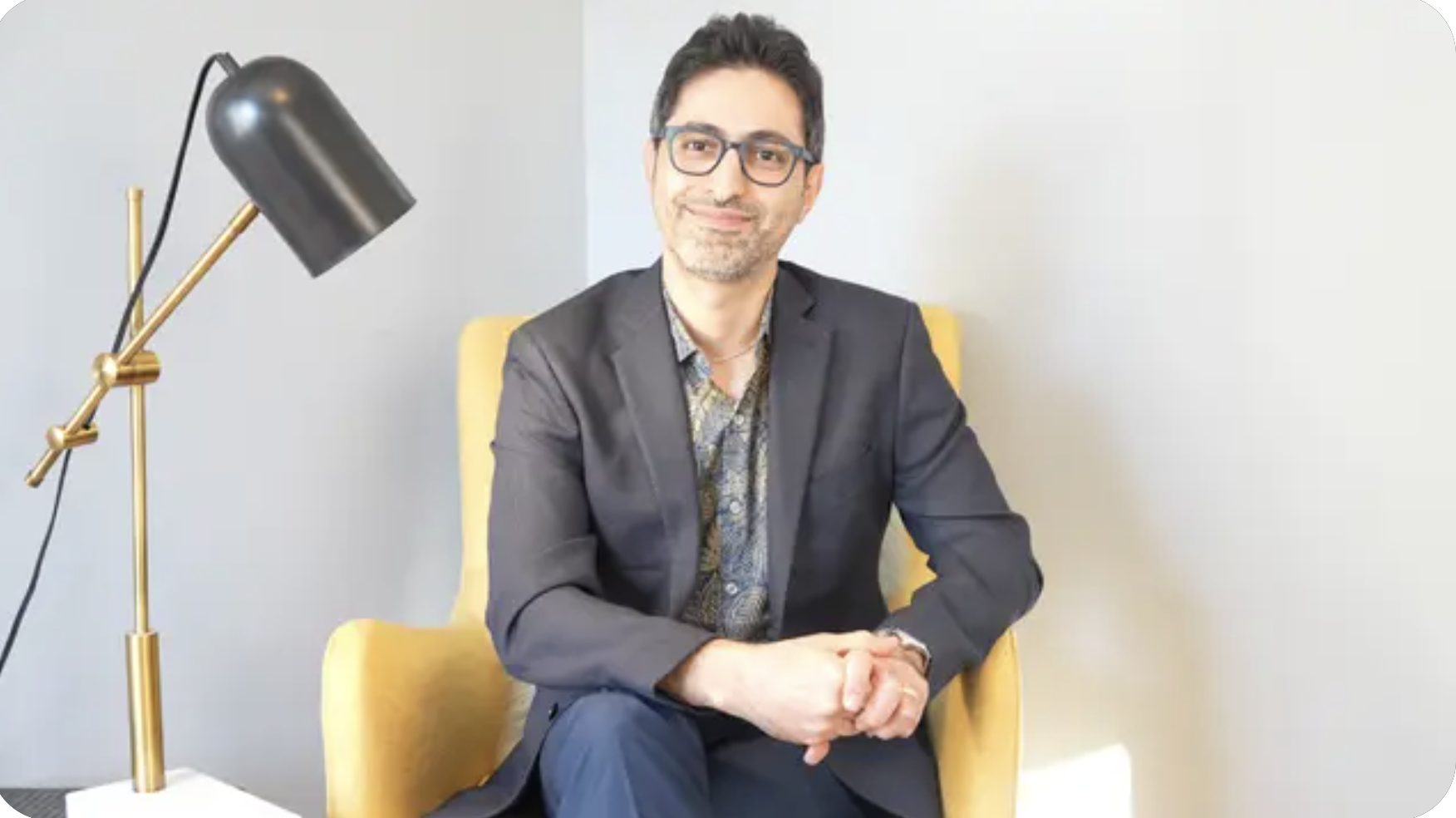
Live questions, directed at my AI avatar. This is where office hours, tutoring, and student support are headed. The faculty who understand it early will shape how it's used.
Tap to start
Anthropic-led coalition using an unreleased frontier model (Claude Mythos Preview) to find high-severity bugs in the open-source software the internet runs on.
One model found more critical vulnerabilities than most human security teams find in a year. Across every major OS and browser.
A curated collection on AI in teaching, research, and practice for Questrom faculty. Three tracks, ordered by how often we find ourselves returning to each one.
